


The first time a child wraps their fingers around a guitar neck, the strings buzz under hesitant fingertips, the notes clumsy but full of possibility. In another room, a teenager sits cross-legged on the floor, headphones on, trying to mimic the riff that’s been stuck in their head for weeks. Meanwhile, a working parent, guitar still in the box, wonders if they’ve missed their chance to learn the instrument they’ve loved since high school.
At Northwest School of Music, we’ve seen it all — students as young as five, retirees chasing a long-held dream, and every age in between. And with each new student, the same question often echoes through the studio: “Is this the right time to start?”
The truth is, there’s no single perfect age to begin learning guitar — only the perfect time for you. Whether you’re raising a young musician, navigating teen passions, or exploring music as an adult, there are unique advantages at every stage of life.
Curious when to take that first step? In this article, we’ll explore the ideal ages to begin learning guitar, offer tips for younger students, and share how the experienced instructors at Northwest School of Music can help you or your child start a meaningful musical journey no matter your age.
Table of Contents
- What Age Is Easiest To Learn Guitar?
- 4 Developmental Factors To Consider When Deciding if Your Child Is Old Enough To Start Learning Guitar
- What To Expect From Different Age Groups When Learning the Guitar
- Tips To Support Beginning Guitar Players Regardless of Age
- Contact Northwest School of Music To Start Learning Guitar Today!
What Age Is Easiest To Learn Guitar?
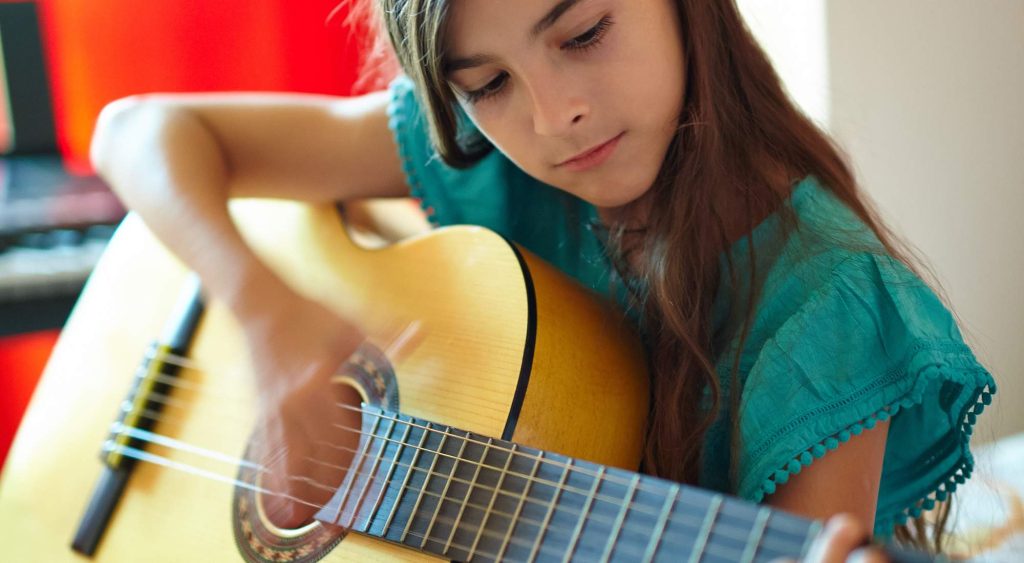
Generally, ages 6 to 9 are often considered the easiest time to begin learning guitar. At this stage, children typically have enough finger strength, coordination, and focus to grasp basic concepts — yet are still young enough to develop strong habits through consistent practice and quality instruction.
Of course, the “easiest” age can vary from child to child. Some 5-year-olds are developmentally ready, while others may thrive more with another year or two of growth. Factors like fine motor skills, attention span, and even personality play a big role in determining when a child is ready to begin lessons.
Physical ability, cognitive readiness, motivation, and daily schedule all influence when it makes sense to begin. But perhaps more important than age is the approach — and that’s where the right teacher comes in.
At Northwest School of Music, our experienced guitar instructors work with students as young as 7, tailoring lessons to match each child’s developmental stage, musical goals, and personality. Whether you’re nurturing a young beginner or starting later in life, we help students build skills in a way that feels achievable and enjoyable.

4 Developmental Factors To Consider When Deciding if Your Child Is Old Enough To Start Learning Guitar
Every child grows and develops at their own pace, which means the “right” age to start guitar lessons isn’t just about turning a certain number. Instead, it’s about looking at a few key developmental factors that affect how ready a child is — physically, mentally, and emotionally — for the instrument.
Here are four important areas to consider when deciding whether your child is ready to begin guitar lessons:
1: Physical Readiness
Guitars require a certain level of hand strength and coordination. If your child struggles to press the strings or reach around the neck of a guitar comfortably, even a scaled-down instrument may feel frustrating. Children with small hands or limited finger strength might benefit from waiting a bit longer — or starting with a ukulele to build confidence and muscle control first.
At Northwest School of Music, we help families choose the right instrument size and adjust technique so younger students can succeed, even if they’re just getting started physically.
2: Attention Span
Learning guitar requires focus — both during lessons and at home during practice. Younger children with shorter attention spans may have a harder time sticking with multi-step instructions or maintaining interest over a full 30-minute lesson. That’s why it’s important to match the structure of lessons to a child’s ability to stay engaged.
Our instructors at Northwest School of Music use interactive, age-appropriate teaching methods to keep young learners focused and having fun, even when their attention might naturally drift.
3: Motor Skills
Guitar playing involves fine motor control — isolating fingers, changing chords, and coordinating both hands to move at once. If your child is still developing these skills (for example, struggling with tasks like buttoning shirts or tying shoes), they may need a little more time before jumping into guitar.
That said, guitar lessons can also help improve motor development! With the right teacher and a bit of patience, many children grow these skills quickly once lessons begin.
4: Cognitive Maturity
Beyond physical ability, guitar students need to understand patterns, follow multi-step instructions, and build on abstract concepts like rhythm and pitch. If your child can stay organized, take direction, and understand basic music theory, they’re likely ready from a cognitive standpoint.
At Northwest School of Music, we tailor our instruction to each student’s stage of development. Whether they’re absorbing new ideas quickly or learning through repetition, we meet them where they are — making music education both accessible and rewarding.

What To Expect From Different Age Groups When Learning the Guitar
While every child is unique, most music educators agree that starting guitar lessons before age 4 is typically too early. At that age, children are still developing the physical strength, fine motor control, and attention span needed to make guitar playing both effective and enjoyable.
That said, there’s a wide range of developmental windows where kids (and adults!) can begin learning — and thrive. Here’s what to expect at different ages, and how Northwest School of Music supports learners at each stage.
Early Childhood Start (Ages 4–7)
Starting guitar in early childhood has its charms — but also its limitations.
Pros:
- Young children are like sponges — they absorb rhythm, melody, and sound naturally.
- This age is ideal for building a sense of pitch, rhythm, and musical curiosity through fun, play-based learning.
- Games, songs, and movement-based activities can set the foundation for future music study.
Cons:
- Most children this age don’t yet have the hand size, finger strength, or coordination needed to form chords or strum comfortably.
- Their attention spans may not support structured, skill-based lessons for more than a few minutes at a time.
At Northwest School of Music, we offer formal guitar lessons beginning at age 7, but that doesn’t mean younger children need to wait to engage with music! Early exposure through rhythm games, listening activities, and even experimenting with smaller stringed instruments (like the ukulele) can prepare them beautifully for later guitar study.
Middle Childhood Start (Ages 8–12)
This age range is often considered the sweet spot for starting guitar.
Why it works:
- Children’s hands are typically large and strong enough to handle chord shapes and frets.
- Attention spans are improving, making it easier to follow instructions and retain information.
- Kids at this age can grasp practice routines and begin to develop self-discipline with guidance.
Scaffolding is key here — building on what the student already knows, introducing one concept at a time, and encouraging independence over time. At Northwest School of Music, our instructors help students develop not just technical skill, but also the confidence to practice and play on their own between lessons.
H3: Teen and Adult Start (Ages 13+)
There’s never such a thing as being too old to learn how to play guitar. In fact, many teens and adults make excellent beginner guitarists.
Advantages:
- Teens and adults have greater motivation and self-awareness — they know why they want to play.
- They also have better discipline and time management skills (even if life gets busy).
- They have improved their ability to grasp abstract musical concepts like scales, keys, and theory.
Challenges:
- Older beginners may feel pressure to “catch up” or compare themselves to more experienced players.
- Time can be a limiting factor, especially for adults balancing work and family life.
That’s why Northwest School of Music tailors instruction to meet each student where they are. Whether you’re a teen pursuing music as a passion, or an adult picking up a long-lost dream, we help you progress at your pace — with structure, encouragement, and experienced guidance.
Tips To Support Beginning Guitar Players Regardless of Age
No matter when someone picks up the guitar — at age 7 or 70 — starting something new can feel exciting, challenging, and even a little intimidating. The good news? Musical training is beneficial at any stage of life! With the right mindset and support system, anyone can become a successful guitar student.
Here are some universal tips to help beginning guitarists stay motivated, make steady progress, and enjoy the journey:
1. Create a comfortable practice space: Set up a quiet, distraction-free area with a chair, music stand, and a place to store the guitar safely. A welcoming environment makes it easier to build a daily habit, especially for younger players.
2. Set realistic expectations: Learning guitar takes time and patience. Celebrate small wins — like playing a clean note or switching between two chords smoothly. Encouragement goes a long way, particularly with children and teens who may compare themselves to others.
3. Keep practice sessions short and consistent: Especially for young learners, 10–15 minutes of focused practice each day is more effective than a single long session. Adults and teens can build up to longer sessions, but consistency is key for all ages.
4. Make it fun: Incorporate songs the student loves, use games or challenges, and don’t be afraid to laugh at mistakes. Learning should feel rewarding, not like a chore.
5. Be involved and supportive: For children, parent involvement makes a huge difference. Sit in on lessons (if allowed), ask about what they’re learning, and cheer them on. Adults and teens can benefit from having a friend or family member check in on their progress, too.
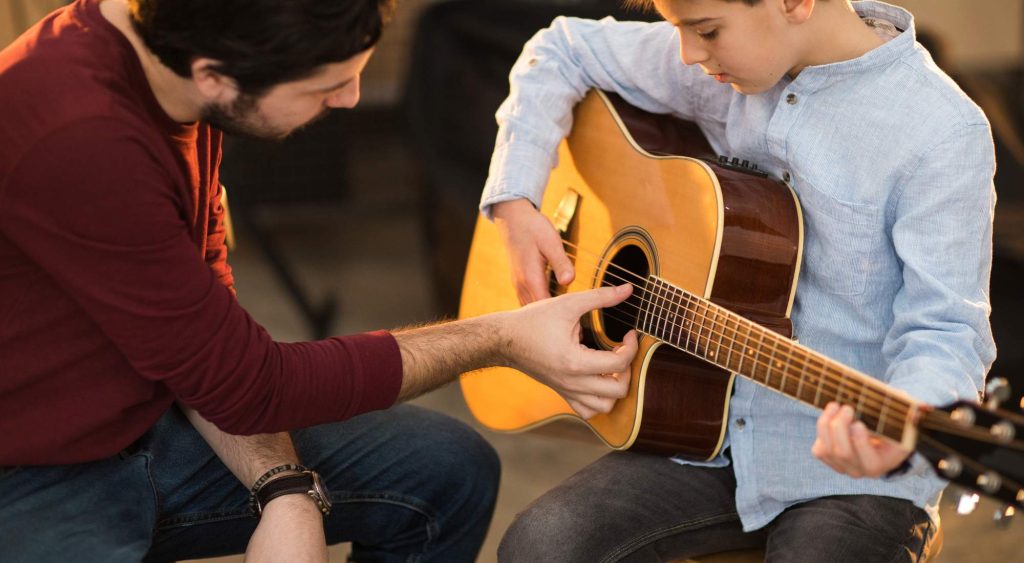
6. Choose the right teacher: A great teacher doesn’t just teach — they inspire. At Northwest School of Music, our experienced instructors know how to connect with students of all ages and learning styles, offering personalized guidance that keeps players engaged and growing.
Contact Northwest School of Music To Start Learning Guitar Today!
No matter your age or experience level, the right teacher can make all the difference in your musical journey — and that’s exactly what you’ll find at Northwest School of Music.
Since 2006, we’ve helped hundreds of students in Salem and beyond discover the joy of playing guitar, from curious kids just getting started to adults finally picking up the instrument they’ve always loved. Our qualified, passionate instructors specialize in working with children, teens, and adult beginners, meeting every student where they are with patience, encouragement, and a proven approach.
Whether you prefer in-person lessons at our welcoming Salem studio or the flexibility of virtual instruction from home, we’ve got options to fit your schedule. Every student also gets access to our online lesson portal, where they can review materials, track progress, and stay organized between sessions.
Even better? New students receive a free trial session when they register — so you can experience our program with no pressure and no long-term commitment.
At Northwest School of Music, we believe it’s never too early — or too late — to start playing guitar. Reach out today, and let us help you or your child take that exciting first step.
Contact us with all your questions and schedule your first lesson. We can’t wait to make music with you!
Is It Better To Rent or Buy a First Instrument?
Beginners may want to consider renting an instrument to test their interest and skill before committing to a purchase. It’s important to set a realistic budget since instrument costs can vary widely. Rental options may also include rent-to-own programs.
If you choose to purchase an instrument rather than rent, consider purchasing an inexpensive instrument until you know how committed your child will be. You can always upgrade later when you’re sure your child is going to stick with it.
How Often Should Beginners Practice Their Band Instruments?
There’s no hard and fast answer here, but most instructors and band directors agree that practicing for at least 15-10 minutes 4-6 times a week is a good place to start. Consistent, regular practice is key. Practicing more often for shorter periods will deliver greater results than longer but less frequent practice sessions.
Time isn’t the only consideration when it comes to practice. What you do during your practice sessions is also important. Regular practice should include:
- Warm up
- Scales
- Rhythmic variations
- Sight reading
- Drilling difficult passages
- And more
Can Adults Start Learning Band Instruments, Too?
Absolutely! It’s never too late to learn to play a new band instrument. Northwest School of Music teaches music lessons to students of all ages.

Join the Band: Begin Your Lessons With Northwest School of Music Today
Start your musical journey with Northwest School of Music!
At Northwest School of Music, your goals are our top priority. We design private and group lessons around you, making music-making fun, rewarding, and tailored to your ambitions.
Whether you play in a band or want to start a new instrument, our experienced instructors are ready to help you succeed with lessons for:
- Trombone
- Trumpet
- Baritone
- Tuba
- French Horn
- Saxophone
- Flute
- Clarinet
- Oboe
We work around your schedule, offer pricing for every budget, and even provide online lessons so you can learn from the comfort of home.
Why Choose Northwest School of Music?
- Lessons available seven days a week
- Proven musical excellence since 2006
- No contracts, with month-to-month flexibility
- Virtual lessons with all the benefits of in-person learning
- Convenient morning and early afternoon times for homeschoolers, students, retirees, and working professionals
Don’t wait — start learning your band instrument today! Register now and receive a free session.



