


The prospect of playing music beautifully can impel budding musicians forward as they seek to master an instrument. Tedious, repetitive efforts are the price they pay to develop greater ease in playing.
But learning to play the oboe is another story. The oboe presents challenges that most other instruments don’t. You’ll have to have an exceptional amount of patience and determination to ascend the learning curve.
Northwest School of Music explains what sets the oboe apart in terms of its execution, as well as how you can approach the learning process to facilitate your progress in mastering this woodwind instrument.
Table of Contents
- How Long Does It Take To Learn the Oboe?
- How Long Does It Take To Become Good at Oboe?
- Is It Hard To Learn the Oboe?
- 9 Tips To Speed Up the Oboe-Learning Process
- Learn To Play the Oboe With the Experienced Team at Northwest School of Music
How Long Does It Take To Learn the Oboe?
There’s no hard and fast answer to this question, as it depends on many factors:
- Your goals
- The level of playing you want to achieve
- How often and how long you practice
- The playing and teaching skills of your instructor
In general, however, you can expect to take at least several months to produce a steady sound and become comfortable with the instrument. You can learn to play the oboe faster with a qualified instructor at Northwest School of Music.
How Long Does It Take To Become Good at Oboe?
This depends on your goals and your definition of “good.” Is it being able to play classical music with reasonable skill or are you hoping to play professionally in a public setting? A few years might be sufficient for you to gain intermediate proficiency, but professional skills will take many years.
Is It Hard To Learn the Oboe?
With practice and perseverance, most people can learn to play an instrument, but the oboe is one of the harder woodwind instruments to learn. There are several reasons for this:
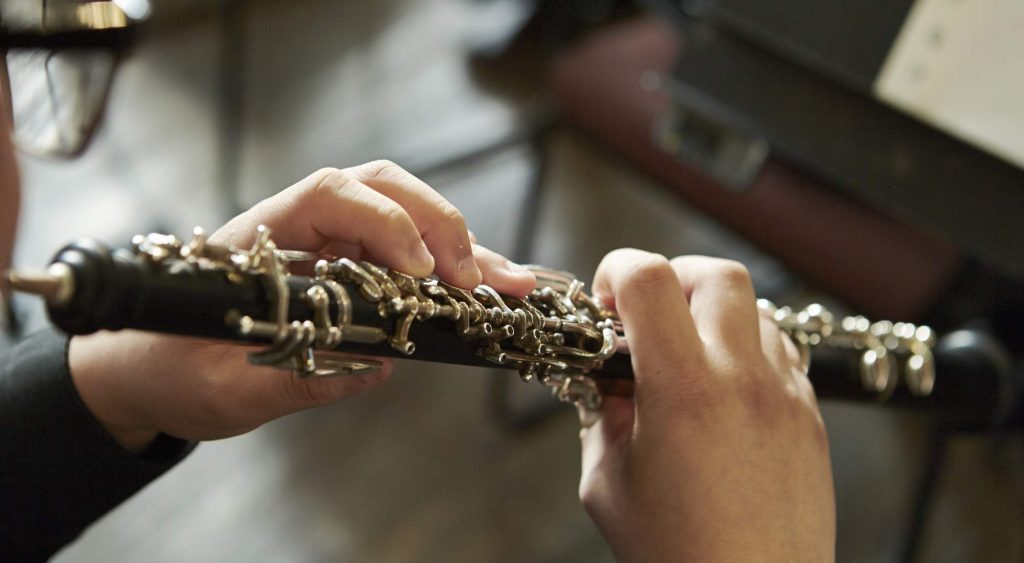
- The structure of the keys is very compact, so a high level of dexterity is required to manipulate the oboe.
- The oboe requires less air than is expelled in normal breathing, so the musician must expel stale air before inhaling during pauses. This can feel like labored breathing until it is mastered.
- Articulation requires more tongue strength and control.
- The kind and quality of the reed determines the tone. If the reed is subpar, playing the oboe can be very frustrating. Reeds need to be replaced about every 2–3 weeks.
Although most people would attest that it is hard to learn the oboe, you can proactively learn about the challenges you are likely to face to prepare yourself for the effort required to play it well.
9 Tips To Speed Up the Oboe-Learning Process
Learning the oboe is a multi-layered skill, and improving your capacity in one area will assist your growth in other areas as well.

#1: Get Familiar With the Instrument
Being knowledgeable about your instrument will help you operate it more adeptly. You should learn:
- The parts of the instrument
- How to assemble and maintain it
- The advantages and disadvantages of buying instead of renting
- Accessories and other equipment needed, such as reeds, etc.
#2: Practice Good Technique
Make good technique a priority from the beginning so you don’t have to correct bad habits later. The following elements are critical for playing the oboe well:
- Posture: Having poor posture can cause injuries and/or discomfort and diminish performance quality. It’s important to learn and work to maintain proper posture so it becomes habitual, and you avoid muscle overuse and imbalance. The following are elements of good posture:
- Your body weight should be evenly distributed, with the feet placed between the pelvis, shoulder-width apart, and oriented slightly outwards.
- If sitting, use a tilted chair, so the hips are on a higher level than the knees.
- Stand with the head, shoulder, and hips oriented so that the spine maintains its alignment and natural curvature.
- The instrument should be adjusted as necessary to fit the musician’s body and allow maintenance of good posture.
- Handling the instrument: Concentrate on bringing the reed to your lips, not your lips to the reed. This way you will avoid strain on your neck. Hold it at a 45-degree angle, with neither side straining more than the other. This ensures that the reed is not compressed and the tuning is altered.
- Breathing: The air pushed through the reed is responsible for the oboe’s sound. Since the reed opening is very small, the student may be tempted to adopt bad habits (such as tension and rigidity) to cope with the incredible amount of air resistance. Breathing must be flexible and efficient to create the appropriate changes in air pressure that produce different notes.
- Embouchure: The position of the lips and mouth muscles on the reed is called the embouchure. The tip of the reed should rest on the lower lip. The upper lip and the corners of the mouth (as if making a long o sound) draw down gently around the reed to prevent air leakage.
The student should avoid pressing down too hard on the reed or making their mouth too rigid. Embouchure should be relaxed and flexible to allow the instrument to cover different registers as needed.
There are many variables involved in embouchure, including the musician’s facial structure, the precise shape of the individual reed, breath and lip pressure, and jaw movement.
#3: Gain Music Theory Knowledge
It is important to have a basic knowledge of music theory (including being able to read and understand notes, the music staff, the treble clef, etc.). But advancing further in this knowledge will be especially helpful to a student’s success in the following ways:
- It allows the musician to be creative while remaining in full control of the instrument.
- It helps a student understand the music they are playing and thus work toward making the instrument follow suit.
- The student can communicate with fellow musicians to adapt to a piece played in concert.
#4: Practice, Practice, Practice
Learning anything takes practice, but the exact amount of time you spend will vary based on your ideal learning routine, the specific challenges you are trying to overcome, and your current level of proficiency.
Practicing for a few minutes most days will probably be better than playing for hours only one day per week. This is because you will spend much of that time relearning skills your body forgot in the interim.
A reasonable schedule, if you are a beginner, is spending 45 minutes most days of the week practicing scales until they are mastered, and then proceeding to 1–3 hours as you progress to learning songs.
If you have the time and stamina, you could practice more. Do what suits you and allows you to make noticeable improvements.
#5: Set Goals
The goals you set should be achievable in the short term (i.e. within 3-6 months). At the end of that time, you can assess your progress and modify your goals to suit where you are at that point.
A longer-term goal might be to gain intermediate proficiency by the end of two years, at which point you can realistically consider whether you wish to continue pursuing mastery of this instrument.
Consider keeping a musical diary to record what you practiced and for how long, as well as any other relevant notes to help you remember what to work on and whether you improved. Over time, you will gain a big-picture look at your progress.
#6: Be Disciplined
Once you’ve got a practice schedule and have set some goals, be disciplined and stick to the plan. You’ll most likely see progress more quickly and fully with diligence and regular practice.
#7: Play With a Group
Once you’ve got the basics and can play songs, consider joining the school band or orchestra to have more time to play and to expand your repertoire.
Playing with a group is a matter of learning to listen well and understanding when and how your instrument can enhance the sound of other musicians. The more you experience the harmony or disharmony created by your contribution, the greater an asset you will be to the group.
The best music is often a group effort. Knowing what part your instrument plays in the whole will give you a deeper appreciation of every part of the orchestra.
#8: Listen to the Pros
Listening to skilled oboists can inspire you with manifest examples of what you are shooting for through your practice. Watch their execution carefully to see if they do something different that leads to a better sound.
Each musician has his or her own unique sound. Attending to what sets oboists apart from one another can give you an idea of the range of possibilities of sounds you can tease out of your oboe.
#9: Invest in Lessons
While self-taught students can make exceptional progress, you can save yourself a lot of frustration and confusion by taking lessons from a qualified instructor.
An instructor can help you:
- Set feasible goals and support you in pursuing them
- Structure your practice time effectively
- Learn correct technique
- Correct bad habits that may be developing before you notice them
To determine the best instructor for you, be sure the person has experience teaching the instrument and is skilled in playing it. Cost and location will also influence your choice. Just remember, you need an instructor good enough to make the cost and effort worthwhile.

Learn To Play the Oboe With the Experienced Team at Northwest School of Music
To take oboe lessons in Salem, OR, contact Northwest School of Music. We offer a wide variety of programs, including voice, singing, and choir lessons, as well as lessons for the following instruments:
- Woodwinds
- Strings
- Ukulele
- Piano
- Guitar
- Brass instruments
- Drums
We also offer group lessons, lessons designed for children aged 3-5, and virtual lessons. Learning your instrument from the comfort of your home may be preferable if you are short on time or located too far from our studio.
Whether you are looking for a place for your child to learn an instrument, are an adult starting from square one, or have decided to pick up an instrument after many years, Northwest School of Music can serve you.
Each member of our team has multiple years of experience with the instruments they teach and holds a degree in music education and/or instrumental performance. They are dedicated to helping you achieve your goals as a musician.
Contact us today for more information about our school and to schedule lessons on the instrument of your choice.



